


You Can't Fix What You Can't See
Before your school district can achieve ADA compliance, you need to answer a fundamental question: what digital content do you actually have? Most districts discover their accessibility challenges run far deeper than anticipated once they conduct systematic audits revealing the true scope of inaccessible documents, websites, and digital resources scattered across departments and storage systems.
An accessibility audit isn’t optional preparation—it’s the foundation for realistic compliance planning. Districts attempting remediation without comprehensive audits waste resources fixing visible problems while missing larger compliance gaps in forgotten repositories, legacy systems, and departmental silos. The April 2026 deadline makes thorough discovery essential rather than merely advisable.
Understanding your actual compliance status requires more than counting PDFs in obvious locations. Complete audits assess document accessibility across all formats, evaluate website WCAG conformance, inventory legacy content in outdated systems, map content creation workflows, and identify ongoing compliance risks from current processes. This discovery work typically reveals challenges 3-5 times larger than districts initially estimated based on surface-level assumptions about their digital footprint.
What a Comprehensive Accessibility Audit Actually Covers
Effective audits examine your district’s entire digital ecosystem rather than just the obvious websites and documents. Start with WCAG 2.1 Level AA compliance assessment of public-facing websites—the most visible accessibility requirement and often the first area scrutinized in complaints or investigations. Automated scanning tools identify technical violations quickly, but manual testing with actual screen readers reveals real-world usability issues that automated tools miss.
PDF inventory represents the largest compliance challenge for most districts. Audit processes should catalog all PDF locations including department shared drives, curriculum repositories, HR systems, facilities archives, board meeting records, student information systems, and email attachment collections. Don’t assume you know where all documents live—systematic file system scans typically reveal significant document collections in forgotten locations or legacy storage systems no longer actively maintained.
Legacy content in outdated formats creates hidden compliance risks. Scanned microfiche, older PowerPoint files, historical database exports, archived website content, and plan room blueprints may not appear in current document management systems but remain legally required to be accessible if still in active use or required for records retention. Audits should specifically identify these edge cases that standard document inventories miss but compliance requirements still cover.
Process audits matter as much as content audits. Evaluate how your district currently creates, reviews, and publishes digital content. Are teachers trained on accessible document creation? Do website editors understand WCAG requirements? Does procurement include accessibility specifications for new systems? Current processes creating inaccessible content daily undermine remediation efforts addressing historical backlogs—sustainable compliance requires fixing both existing content and ongoing creation workflows.
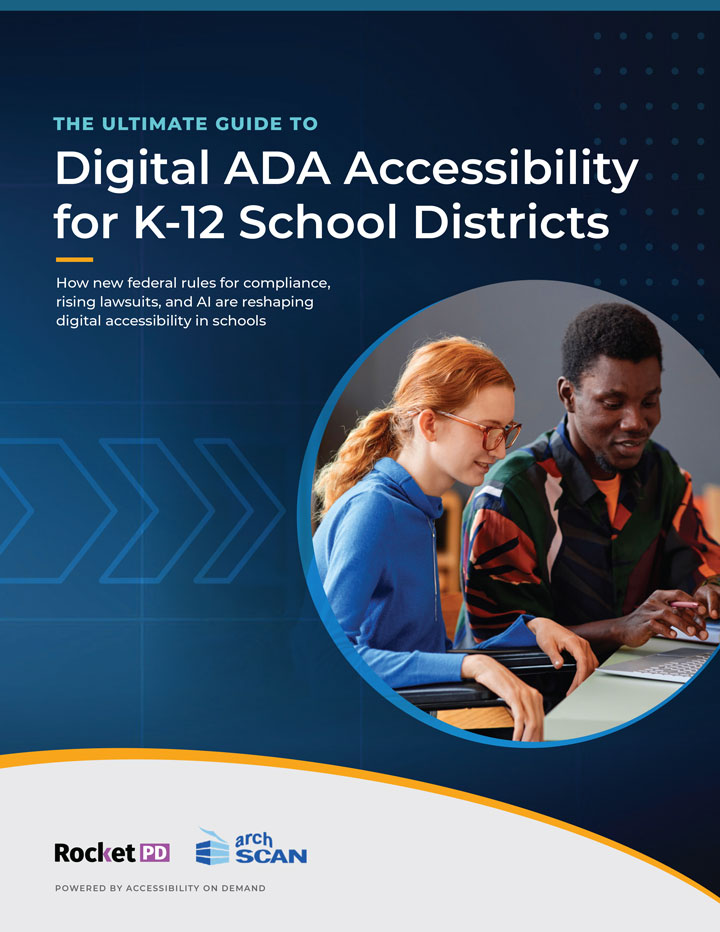
Free Guide
Download Now
No spam. Just actionable insights for district leaders.
Conducting Your Audit: Internal vs Professional Approaches
Districts face a strategic choice between conducting accessibility audits internally using staff resources and automated tools, or engaging professional services providing comprehensive assessment and remediation planning. Both approaches have merit depending on technical capability, available time, and compliance confidence requirements.
Internal audits work well for districts with technical staff capable of running accessibility evaluation tools, understanding WCAG success criteria, and systematically inventorying document repositories. Free tools like WAVE, axe DevTools, and PAC 2024 provide solid starting points for website and PDF assessment. IT teams can develop file system scanning scripts to catalog PDF locations and volumes. This DIY approach costs primarily staff time rather than external budget but requires appropriate expertise to interpret results accurately and develop realistic remediation plans.
Professional audit services bring specialized expertise and third-party validation that internal assessments can’t match. Experienced accessibility consultants know where districts typically miss compliance gaps, understand the difference between automated tool reports and genuine assistive technology usability, and provide cost and timeline estimates grounded in actual remediation experience rather than assumptions. For districts lacking internal accessibility expertise or facing legal scrutiny requiring defensible compliance documentation, professional audits deliver higher confidence even at additional cost.
The middle path combines internal inventory work with targeted professional assessment. District IT staff can catalog document locations, count files, and run initial automated scans to establish baseline data. Professional consultants then sample content for manual accessibility testing, evaluate process compliance, and develop prioritized remediation roadmaps based on risk and budget realities. This hybrid approach balances cost efficiency with expert guidance on areas where internal teams lack specialized knowledge.
Turning Audit Results Into Actionable Remediation Plans
Audit findings mean nothing without translation into prioritized action plans matching your district’s resources, timeline, and risk tolerance. Start by categorizing identified issues by compliance risk rather than just volume. High-traffic public websites with WCAG violations, frequently-requested documents with accessibility barriers, and content subject to active complaints deserve immediate attention even if they represent small percentages of total inventories.
Document complexity assessment helps match remediation approaches to content characteristics. Simple text-based PDFs with straightforward layouts remediate efficiently through automated platforms at minimal cost per document. Complex scanned blueprints, historical microfiche requiring OCR cleanup, multilingual content, and specialized technical documents need professional remediation services providing human expertise. Audit results should segment inventories by complexity characteristics rather than treating all content uniformly.
Cost and timeline projections ground remediation planning in budget realities. Multiply document counts by remediation costs based on complexity categories—automated platform pricing for straightforward content, professional service rates for complex materials. Add time for staff training on accessible content creation, process changes preventing new violations, and ongoing monitoring ensuring sustained compliance. Districts discovering they have $500,000 in remediation work and $50,000 budgets need realistic conversations about phased approaches, risk prioritization, and potential budget increases rather than assuming wishful thinking closes gaps.
The resources above provide starting points whether you need quick remediation for identified documents or comprehensive consultation on large-scale compliance challenges. Understanding what you actually have represents the essential first step—accurate audit results enable strategic planning that assumptions and guesswork can’t support.
Start With Understanding What You Actually Have
Accessibility compliance begins with accurate assessment of your current state. Assumptions about what content exists, where it lives, and how accessible it already is typically prove wrong once districts conduct systematic audits. The April 2026 deadline makes thorough discovery essential rather than optional—you can’t develop realistic remediation plans without understanding the actual scope of work required.
Whether you audit internally, engage professional services, or combine both approaches, completing comprehensive assessment before committing to remediation strategies prevents costly mistakes and missed compliance gaps. The tools and consultation options above provide multiple paths forward based on your district’s specific capabilities and requirements.