

Your Backlog is Growing
From Accessibility Backlog to
Get 100 Free Credits to Start Fixing Your PDFs Today.
Watch video
Most school districts are facing the same reality.
Years of legacy PDFs that are not accessible
New documents being created every day
Accessibility work handled manually across teams
The result isn’t just compliance risk — it’s operational strain.
The deadline may have moved — but the backlog is still growing.
Up to now, effectively remediating PDF documents was prohibitively expensive for districts and time-consuming for staff.
We’ve partnered with archSCAN and Accessibility on Demand (AoD) to give schools a fast, affordable way to start remediating inaccessible PDF documents — without hiring consultants or overloading staff.
WHY THIS MATTERS NOW
Accessibility is No Longer Just About Compliance
It’s about:
- Managing growing document volume
- Reducing manual workload on staff
- Ensuring families and students can access critical information
- Supporting emerging AI and digital workflows
As districts adopt new tools and systems, accessible content becomes foundational — not optional.

Beyond Compliance
Accessibility Is Core to Serving Every Family
Digital accessibility has always been about ensuring every student, family member, and community partner can access important school information.
Most districts want their documents to be accessible — but years of legacy files, limited capacity, and evolving standards have made this work difficult to tackle at scale. Accessibility isn’t just about limiting risk; it’s about removing barriers and making sure everyone in the community can fully participate in school life.

The Problems
The Reality Districts Face When Tackling Digital Accessibility
Thousands of legacy PDFs
Documents created over many years
No internal accessibility specialists
Manual remediation costs of $5–$25 per page
SMARTER ACCESSIBILITY
A Faster, Scalable Way for Districts to Achieve ADA Document Accessibility
With automation-first remediation and expert verification, districts can now:
- Fix large volumes of PDFs in minutes
- Reduce remediation costs by 70–95%
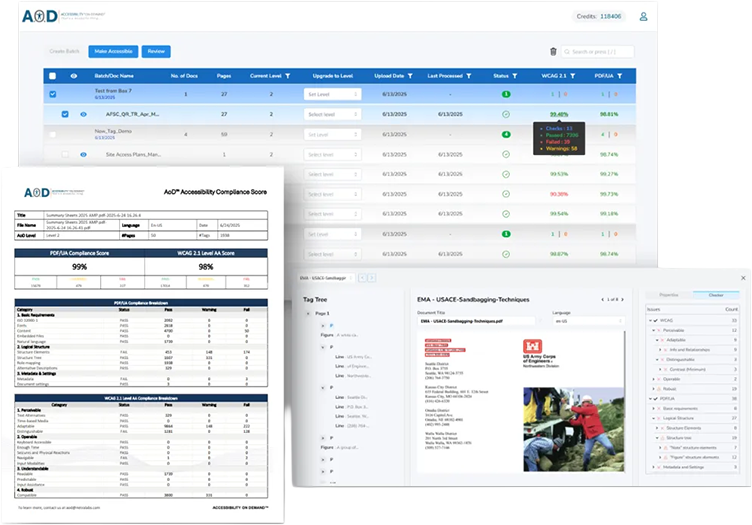
- Receive compliance reports for each document
- Layer in deeper, manual remediation when they need it
- Build ongoing accessibility workflows instead of one-time cleanups
HOW IT WORKS
Get Started in Minutes With Real Documents and Real Results
1
Upload documents or connect your website
2
Use 100 free credits to remediate real PDFs
3
Review compliance reports
4
Decide next steps with real data, not estimates
TRY IT TODAY
100 Free Credits
Set up a free account. Submit your documents. See your results.
FREQUENTLY ASKED QUESTIONS
Making Sense of ADA Digital Accessibility and Compliance for Schools
What laws apply to school districts when it comes to accessible documents like PDFs?
School districts that receive federal funds must comply with Section 504 of the Rehabilitation Act and Title II of the Americans with Disabilities Act (ADA). These laws require that digital content—including PDFs—be accessible to individuals with disabilities. While Section 508 directly governs federal agencies, its accessibility standards have become the benchmark for K-12 compliance.
Are there deadlines for schools to make documents accessible?
Yes. The U.S. Department of Justice’s final web accessibility rule (April 2024) requires public entities, including school districts, to make digital content meet WCAG 2.1 Level AA standards. In April 2026, the government extended the deadlines by one year:
- Districts serving 50,000 or more people must comply by April 24, 2027.
- Smaller districts have until April 26, 2028.
These deadlines apply to all public-facing web and mobile content, which includes PDFs shared with families, students, or staff.
What if our district still uses older, inaccessible PDFs?
If your existing documents aren’t accessible, your district may face complaints or investigations under the ADA or Section 504. Even before the federal deadlines, schools are already required to ensure effective communication for all individuals with disabilities. Fixing older PDFs should be part of your district’s accessibility plan.
Do we need to fix every old document or just new ones going forward?
Your district must ensure that any active or public-facing document—one that families, students, or staff still use—is accessible. The compliance deadlines allow time for full implementation, but the legal duty to provide accessible materials exists today. Starting remediation early reduces risk and workload later.
Does Section 508 compliance apply only to students?
No. These laws cover everyone who interacts with your district—students, parents, guardians, staff, and community members. Any form, handbook, announcement, or PDF that communicates information about school programs or services must be accessible to individuals with disabilities.
What makes a PDF accessible?
An accessible PDF includes:
-
Proper tags for structure and navigation
-
Alt text for images
-
Correct reading order
-
Searchable, selectable text (not just scanned images)
-
Logical headings and tables
-
Clear, descriptive links and titles
Following these practices ensures screen readers and assistive technologies can interpret your documents correctly.
Are we responsible if a vendor creates inaccessible PDFs?
Yes. Even when you work with outside vendors, the district remains responsible for ensuring accessibility. Contracts should include accessibility requirements, and vendors should verify that materials meet WCAG 2.1 AA or Section 508 standards. Ultimately, compliance responsibility rests with the school district.